Posted by Spycor LLC on Dec 12th 2025
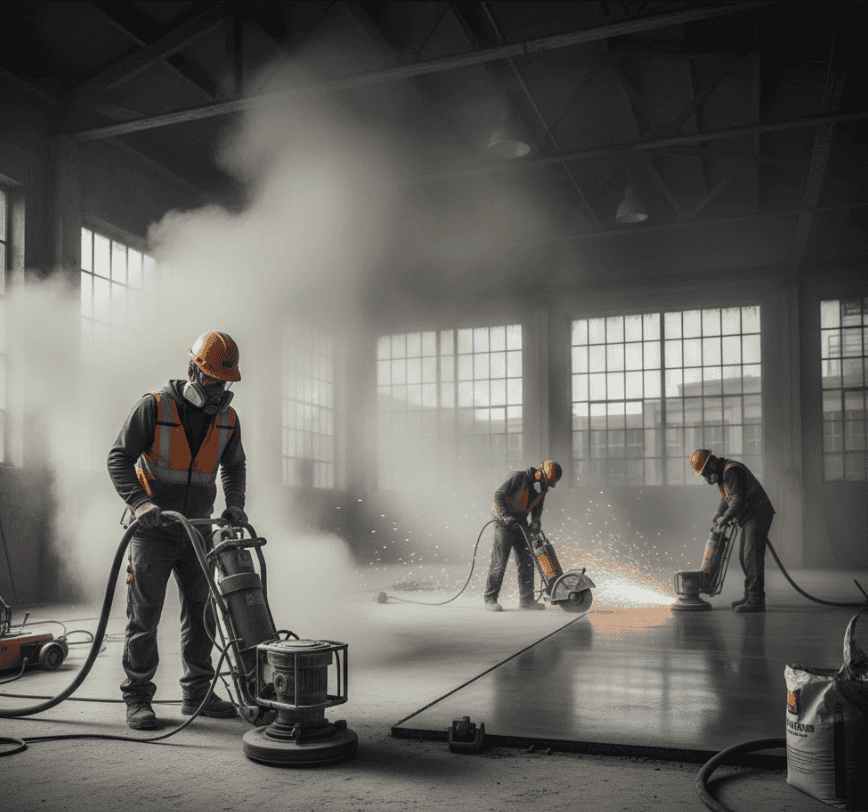
Concrete grinding, cutting, and polishing are among the most dust-intensive tasks in the construction and renovation industry. Without a professional-grade wet-dry vacuum designed specifically for high-volume particulate matter, a jobsite can quickly become a hazardous environment. Standard shop vacuums are often overwhelmed by the ultra-fine nature of silica dust, leading to clogged filters, motor failure, and, most importantly, health risks for the crew.
Selecting the right concrete dust collection system is not just about keeping the jobsite clean; it is about meeting rigorous safety standards and ensuring your power tools—such as angle grinders and crack-chasing saws—operate at peak efficiency.
Why Standard Vacuums Fail at Concrete
Dust Collection
Concrete dust is composed of crystalline silica, a substance that is significantly finer and more abrasive than typical household or general construction debris.
- Microscopic Particle Size: Concrete dust particles can be as small as 0.3 microns. Most standard vacuums utilize filters that allow these tiny particles to pass straight through the exhaust, blowing them back into the breathing zone.
- Rapid Filter Clogging: Because silica is so fine, it quickly coats the surface of standard pleated filters, choking the airflow. This leads to a sudden drop in CFM (Cubic Feet per Minute), rendering your dust shrouds and grinders ineffective.
- Abrasive Nature: Silica is extremely hard. If the vacuum's filtration system fails, the dust enters the motor housing, causing premature wear and mechanical failure.
To combat these issues, contractors require a specialized wet-dry vacuum equipped with HEPA filtration and high static pressure capabilities.
OSHA Compliance and Silica Dust
Mitigation
The Occupational Safety and Health Administration (OSHA) has strict regulations regarding respirable crystalline silica (Rule 1926.1153). For most concrete tasks, OSHA "Table 1" specifies the use of a dust collector that provides a specific airflow (CFM) based on the size of the blade or tool, paired with a filter that is at least 99% efficient.
A HEPA wet-dry vacuum is the gold standard for compliance. A certified HEPA filter must capture 99.97% of particles at 0.3 microns. Utilizing an OSHA-compliant system like those from Nikro or Abatement Technologies ensures you avoid heavy fines and, more importantly, protect your respiratory health.
Top-Rated Wet-Dry Vacuums for Concrete
Professionals
When browsing for the best equipment at Spycor Environmental, several models stand out for their ability to handle both dry concrete dust and wet slurry generated during wet-grinding operations.
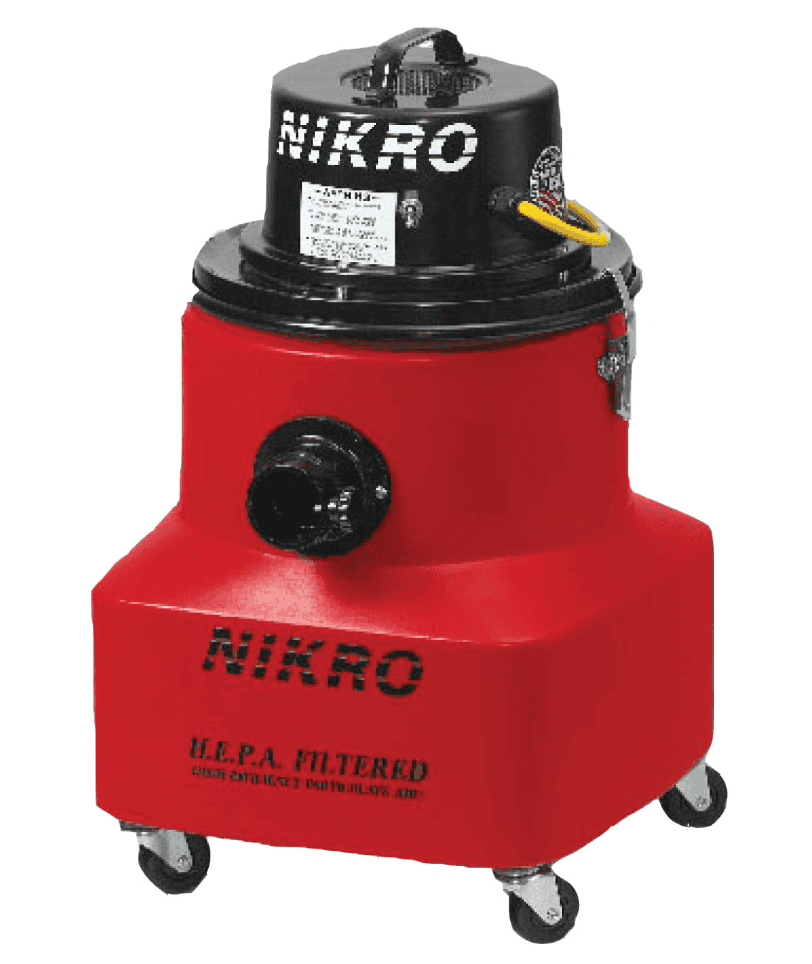
1. Nikro PW10088 - 10 Gallon HEPA Vacuum (Wet/Dry)
The Nikro 10 Gallon HEPA Vacuum is a compact powerhouse designed for contractors who need portability without sacrificing filtration integrity.
- Performance: Delivering 112 CFM and 107 inches of water lift, this unit provides the high static pressure needed to pull dust through long hoses and tight shrouds.
- Filtration: It features a multi-stage filtration system including a certified HEPA filter, ensuring that even the finest silica particles are trapped within the dent-proof polyethylene tank.
- Versatility: As a true wet-dry vacuum, it includes an automatic full-tank water shut-off, making it ideal for picking up wet grinding slurry.

2. Nikro PW15110 - 15 Gallon HEPA Vacuum (Wet/Dry)
For larger jobsites that require more capacity, the Nikro 15 Gallon HEPA Vacuum offers a significant upgrade in volume.
- Capacity: The 15-gallon tank reduces the frequency of emptying, which is crucial during continuous grinding operations.
- Durability: The tank is corrosion-proof and built to withstand the rigors of heavy construction environments.
- Ease of Use: Mounted on a sturdy cart assembly with large wheels, it maneuvers easily over cords and debris on uneven concrete floors.

3. Abatement Technologies V8000WD - Wet/Dry HEPA Vacuum
The Abatement Technologies V8000WD is widely recognized for its high-performance airflow.
- Airflow: Rated at 135 CFM, it is perfectly suited for use with 5-inch and 7-inch hand grinders.
- Lightweight Design: Weighing only 32 lbs, it is one of the most portable professional HEPA vacuums on the market.
- Liquid Recovery: It is specifically engineered to handle non-flammable liquids, making it a favorite for remediation specialists who deal with both dry dust and wet spills.
Key Features to Look for in a Concrete
Dust Vacuum
CFM vs. Water Lift (Static Pressure)
Understanding these two metrics is vital for concrete work:
- CFM (Cubic Feet per Minute): This measures the volume of air moved. For concrete dust collection at the tool source (shrouds), higher CFM helps keep the dust contained.
- Water Lift: This measures the "pull" or suction strength. Because concrete dust is heavy and often travels through small-diameter hoses, high water lift (ideally over 90 inches) is necessary to prevent the dust from settling in the hose.
Filter Cleaning Systems
The most advanced wet-dry vacuums for concrete feature some form of filter cleaning. This might be a manual "shaker" system or a "pulse" system that uses air to knock dust off the filter without opening the vacuum. Keeping the filter clean is the only way to maintain consistent CFM during long grinding sessions.
Tool Integration and Auto-Start
Some professional models feature an integrated power outlet. You plug your grinder directly into the vacuum; when you trigger the tool, the vacuum automatically starts. This ensures that the dust collection system is always active whenever you are cutting or grinding.
Integrating Vacuums with Concrete
Grinding Tools
To achieve a near-dustless environment, the vacuum must be part of an integrated system:
-
Dust Shrouds: These attach to your angle grinder or saw to create a seal against the concrete surface.
-
HEPA Vacuum: Connected via a crush-proof hose, the vacuum pulls the dust directly from the shroud.
-
Pre-Separators (Optional): For very high-volume work, a pre-separator (like a "Dust Deputy") can be placed between the tool and the vacuum. This captures 90% of the dust before it reaches the vacuum filter, exponentially extending the life of your expensive HEPA filters.
Maintenance for Long-Term Performance
A wet-dry vacuum is a significant investment. Proper maintenance is required to ensure it continues to meet OSHA standards:
- Dry to Wet Transition: Never pick up liquid while a dry paper or dacron filter is installed. Always switch to the foam filter or the specific wet-rated filter before liquid recovery.
- HEPA Filter Care: Never attempt to "blow out" a HEPA filter with compressed air. This destroys the microscopic fibers and ruins the filter's efficiency. Filters should be replaced according to the manufacturer's schedule or when the airflow significantly drops.
- Tank Emptying: Concrete slurry can harden like stone if left in the tank. Always empty and rinse the vacuum tank immediately after wet use.
Elevate Your Jobsite Standards
The difference between a frustrating, dusty jobsite and a professional, efficient operation often comes down to the quality of your wet-dry vacuum. By investing in high-CFM, HEPA-filtered equipment from trusted brands like Nikro, you are ensuring compliance with OSHA regulations, extending the life of your power tools, and providing a safer work environment for your team.
For the most demanding concrete grinding and dust collection tasks, only professional-grade equipment will suffice.
Order Now at
Frequently Asked Questions (FAQ)
Can I use a regular shop vac for concrete dust if I buy a HEPA filter for it?
While some retail shop vacs allow for HEPA filter upgrades, they often lack the "seal" required to be truly OSHA compliant. Professional wet-dry vacuums are built with airtight housings and multi-stage filtration that ensures 100% of the air passes through the HEPA media. Furthermore, standard shop vacs lack the water lift (suction power) required to effectively pull heavy concrete dust through a tool shroud.
What CFM do I need for a 7-inch concrete grinder?
According to OSHA Table 1, for handheld grinders used for tasks other than crack chasing, you generally need a vacuum system that provides at least 25 CFM per inch of blade diameter. For a 7-inch grinder, a vacuum with at least 175 CFM is recommended for full compliance, though many contractors find that high-quality 130-150 CFM units with high static pressure perform exceptionally well for most tasks.
How often should I replace the HEPA filter in my Nikro vacuum?
This depends on the volume of dust you are collecting. Most professionals replace the pre-filters (dacron bags) daily or weekly to protect the more expensive HEPA filter. The HEPA filter itself should be replaced if you notice a drop in suction that isn't resolved by cleaning the pre-filters, or if the vacuum's performance indicator (if equipped) suggests a clog.
Is it safe to pick up water and concrete slurry with a HEPA vacuum?
Yes, provided the vacuum is a designated wet-dry vacuum like the Nikro PW10088. You must ensure you are using the correct wet filters (like foam sleeves) and that the HEPA filter is protected from direct water contact. Always follow the manufacturer’s instructions for switching between wet and dry modes.
Does Spycor.com provide replacement filters for these vacuums?
Yes, Spycor Environmental carries a full line of replacement HEPA filters, dacron bags, foam filters, and specialized tool kits for all Nikro and Abatement Technologies models to keep your equipment running at peak performance.